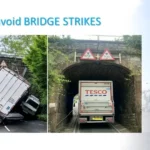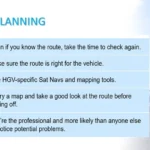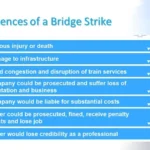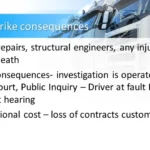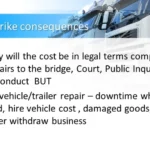
The following toolbox talk presentation on Bridge Strikes and how to avoid them has been put together by Dave Cox CMILT of DCT Consultancy Ltd to be delivered at regular intervals.
Please read through the following information and watch the embedded videos.
After you have completed it, please make sure that you then complete the form to confirm that you have received this guidance and have understood.
Thank you
The aim of this toolbox talk is to communicate the company policy and procedure relating to bridge strikes and how to avoid them. This applies to all drivers (including sub-contracted and agency).
Did you know?
Reasons for bridge strikes occurring:
Answer:
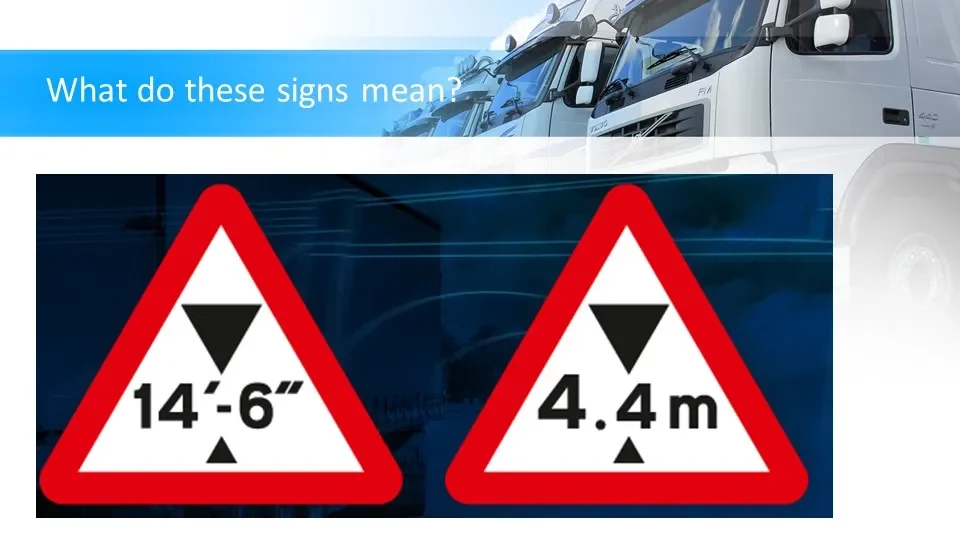
Vehicles exceeding 14′-6” in height prohibited
Answer:
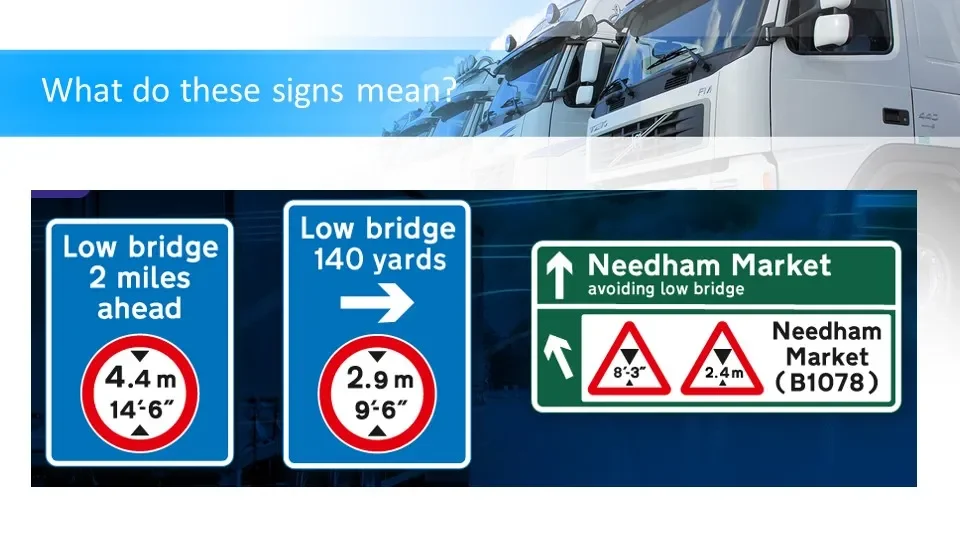
A warning sign indicates the maximum headroom under a bridge or other overhead obstruction, in metric and imperial units. This sign may be sited well in advance of a bridge, with the distance (in either yards or miles) shown on a plate; this may have an arrow to indicate that the bridge is on a side road at a junction ahead.
Answer:
Advance warning of a mandatory height restriction ahead; the sign may include an arrow, if the restriction is on a side road.
Answer:
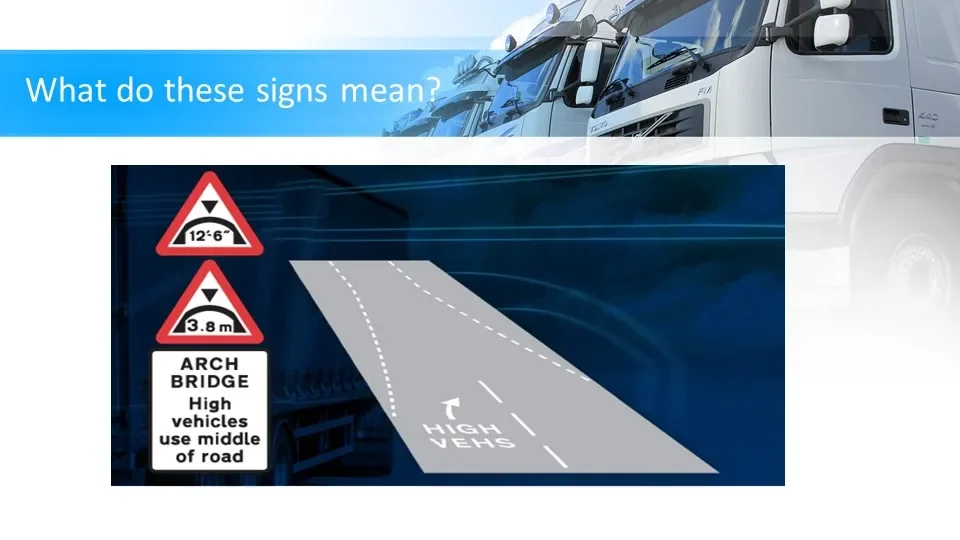
The maximum safe headroom at an arch bridge is shown on the triangular warning signs. Road markings guide high vehicles through the highest part of the arch. Drivers of all vehicles should give way to oncoming high vehicles in the middle of the road when there is insufficient room to pass. Drivers of cars and other low vehicles may keep to the left-hand side of the road, crossing the road markings, where this would enable them to pass oncoming vehicles in safety.