Tool Box Talk – Vehicle Maintenance and Defect Checks
Subject: BASIC VEHICLE MAINTENANCE CHECKS
Purpose of this toolbox talk
This toolbox talk is a reminder of the basic vehicle checks that every driver must carry out before using a company vehicle.
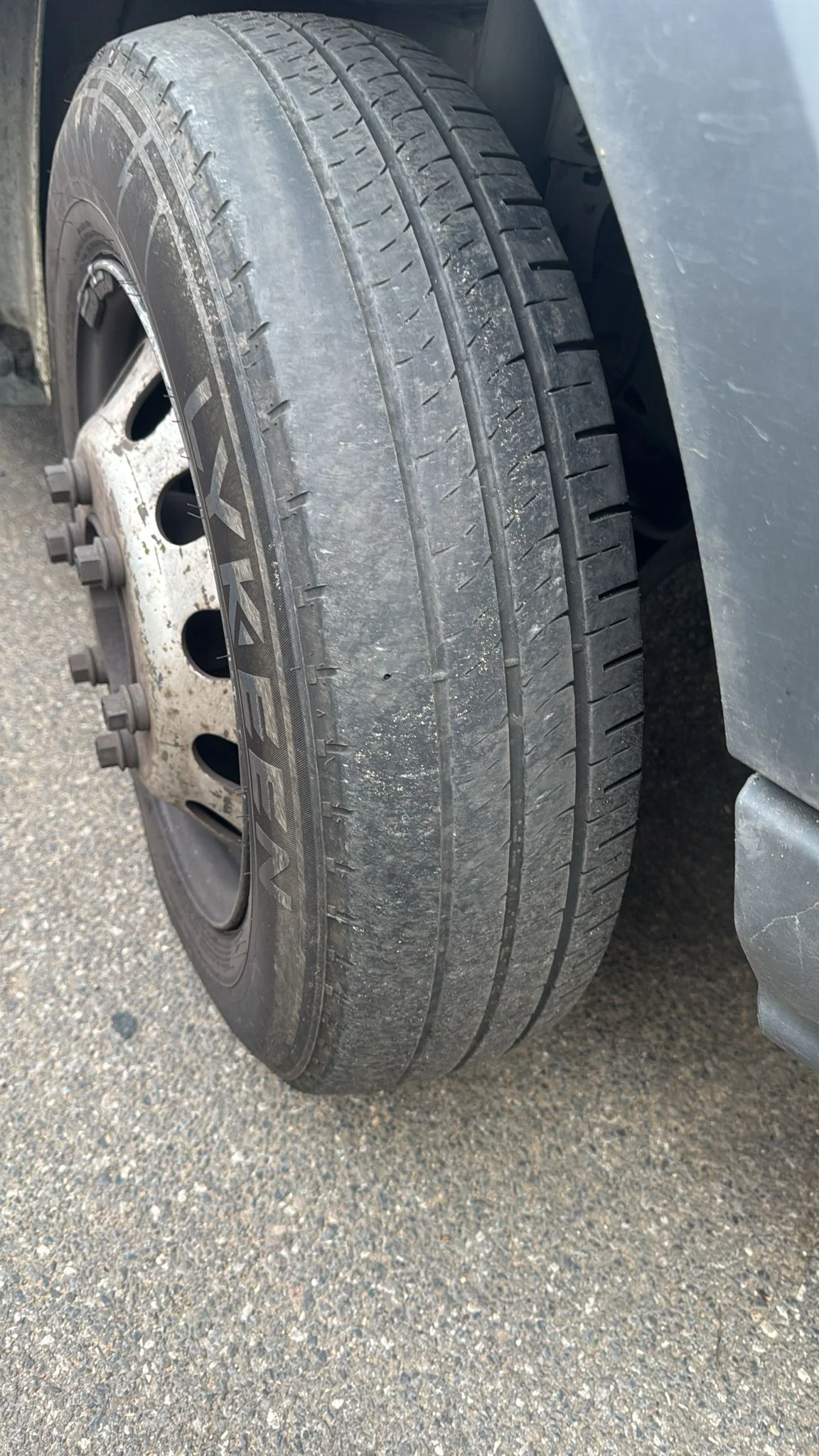
Recent inspections have identified vehicles being used with seriously worn tyres, low oil, insufficient coolant and no AdBlue. These are basic issues that should be identified before a vehicle leaves the yard.
Checking a vehicle is not somebody else’s responsibility. The person driving it is responsible for making sure it appears safe and roadworthy before setting off.
Why these checks matter
Failing to carry out basic checks can result in:
- A collision, breakdown or serious injury.
- A vehicle being prohibited from use.
- Penalty points, fines or prosecution.
- Damage to the engine or other expensive components.
- Missed or delayed works.
- Additional recovery, repair and vehicle-hire costs.
- Harm to the company’s reputation.
A tyre in the condition shown during this talk must never be ignored. If you are unsure whether a tyre or any other part of the vehicle is safe, do not drive the vehicle until it has been checked.

Basic checks before using a vehicle
Before starting your journey, take a few minutes to walk around the vehicle and complete the following basic checks.
1. Tyres and wheels
Check:
- Each tyre has sufficient tread across its width.
- There are no bald areas, cuts, bulges, exposed cords or other visible damage.
- Tyres do not appear flat or significantly underinflated.
- Wheel nuts appear present and secure.
- Nothing is trapped between twin rear wheels, where fitted.
Do not rely only on a dashboard warning. Physically look at every tyre, including the inner tyres on twin-wheel vehicles.
2. Engine oil
Check the engine oil level regularly and before use where required.
- Park on level ground and use the dipstick to check level.
- Ensure the oil is between the minimum and maximum levels.
- Do not continue driving if an oil-pressure warning light remains illuminated, with the exception of OHE which has a sensor issue.
- Report unexplained oil loss or visible leaks.
- Top up oil if necessary. There is an oil chart on the wall by the Ad-Blue and in Crew Room.
Using a vehicle without sufficient oil can cause serious and expensive engine damage.
3. Coolant
Check that the coolant is at the correct level when the engine is cold.
- Do not remove the coolant cap while the engine is hot.
- Look underneath the vehicle for leaks or puddles.
- Report repeated loss of coolant or any overheating warning immediately.
- Top up if needed.
Do not simply top up a vehicle repeatedly without reporting the underlying problem.
4. AdBlue
Where the vehicle uses AdBlue:
- Check the dashboard level or warning display.
- Ensure there is enough for the planned journey.
- Top it up or report the low level before leaving.
- Do not ignore AdBlue warnings, as the vehicle may eventually restrict performance or fail to restart.
5. Lights and warning lamps
Check that:
- Headlights, sidelights, brake lights, indicators, hazard lights and beacons are working.
- Lenses are reasonably clean and not badly damaged.
- No serious warning light remains illuminated after starting the engine.
If you do not understand a warning light, ask before driving.
Spare bulbs are avialable in Unit X.
6. Windscreen, mirrors and visibility
Check that:
- The windscreen and mirrors are clean and provide a clear view.
- Windscreen wipers and washers work correctly.
- There are no serious cracks or damage affecting the driver’s view.
- The screen-wash level is sufficient.
- Number plates, lights and required markings are visible and clean.
7. Brakes and steering
Before entering normal traffic, check that:
- The brakes respond correctly.
- The parking brake holds the vehicle.
- The steering feels normal.
- There are no unusual noises, excessive movement or warning lights.
Any concern involving brakes or steering must be treated as a serious defect.
8. General condition and security
Walk around the vehicle and check:
- There is no obvious bodywork damage that could make it unsafe.
- Doors, shutters, tail lifts and storage compartments are secure.
- Loads, signs, frames, tools and equipment are properly restrained.
- Nothing is likely to fall from or move around inside the vehicle.
- There are no obvious fuel, oil, coolant or other fluid leaks.
Reporting defects
Defect books are used to record defects on vehicles weighing 7.5 tonne or more.
A web-based vehicle defect-reporting system is currently being developed. Further instructions will be issued when this becomes available. Until then:
- Record defects clearly in the vehicle defect book.
- Serious or safety-critical defects must also be reported directly to management.
- Provide the vehicle registration, defect details and photographs where helpful.
- Do not assume somebody else will report it.
- Do not drive a vehicle with a defect that could make it unsafe or illegal.
- Do not remove, hide or ignore an existing defect report.
If a serious defect develops during a journey, stop somewhere safe and contact management for instructions.
Reporting a genuine defect will not get anybody into trouble. Failing to check or report something that should have been noticed may result in further action.
Looking after company vehicles
Safe TM Services spends a significant amount of money maintaining its fleet. This includes:
- Servicing, tyres, repairs and replacement parts.
- Damage and repairs arising during work and, in some cases, personal use.
- Recovery and emergency repairs.
- Hiring replacement or additional vehicles.
- Scheduled six-weekly preventative maintenance inspections for vehicles of 7.5 tonnes and above.
These inspections and maintenance arrangements do not replace the driver’s checks.
Every unnecessary repair, breakdown or hire vehicle places an additional cost on the business. Collectively, these costs affect the money available for investment in vehicles, equipment, staff and the future development of the company.
Drivers who are permitted to use company vehicles personally remain responsible for treating them properly, checking them and reporting problems.
Read everything? Complete the form here:
Key message
Check the vehicle before you drive it.
A basic walkaround takes only a few minutes and can prevent an accident, breakdown or substantial repair bill. It also forms part of your shift.
If something does not look or feel right report it, do not ignore it.
Drivers are expected to use common sense when reporting defects. There is no need to repeatedly report old, minor scratches or cosmetic marks that have already been recorded. Once the new web-based system is introduced, drivers will be able to see which defects and damage have previously been reported. However, any new damage—however minor—must be reported if you caused it or noticed it for the first time. Anything that could affect the vehicle’s safety, roadworthiness, operation or legal use must always be recorded and reported immediately. If you are unsure, report it and ask.