Chevron Supply Chain Briefing Document - PPE

Introduction

Following a Health & Safety site audit on 18th Feb on the M3 light water scheme it was report 2 crews were not wearing correct PPE requirements. Therefore, all your employees are required to read the attached Toolbox Talk document and sign to conform they fully understand the PPE requirements.

We acknowledge none of your employees were responsible for the incident, but due the serious nature of the situation all sub-contractors are required to complete and return the attached documentation.

  • Personal Protective Equipment (PPE) is defined as “all equipment (including clothing affording protection against the weather) which is intended to be worn or held by a person at work to protect the wearer against one or more risks to health or safety”
  • It includes things like helmets, visors, goggles, ear defenders, respirators, gloves, gauntlets, aprons, footwear, etc and is intended to eliminate or minimise the severity of the injury when things go wrong.
  • PPE does not eliminate all the risks of an accident happening but goes a long way to minimise their effect by reducing the severity of the potential injury and is normally used when there is no other way to eliminate or control the risk
  • To allow the right type of PPE to be chosen, carefully consider the different hazards in the workplace. This will enable you to assess which types of PPE are suitable to protect against the hazard and for the job to be done
  • Chevron has an obligation to provide suitable protective equipment which has a mark to verify it meets appropriate standards and it is the operative’s obligation to ensure they have fit for purpose PPE or if not have notified their supervisor with enough time to provide it before a shift

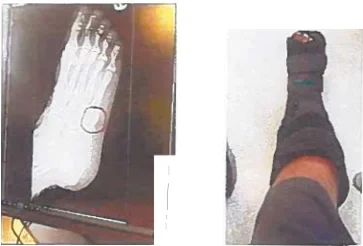
Fractured Foot Due To Rushing and Incorrect Footwear

  • On June 32024 an operative was rushing to pack up equipment from a road closure even though they had no time constraints
  • Because he usually wears trainers when sitting in the van and driving he did not put his boots back on when he exited the van
  • This resulted in him stumbling and rolling his ankle which led to a fracture in his foot
  • Ankle support and traction from the boot tread may have enabled the accident to have been avoided or the severity decreased.
  • PPE is mandatory on site and when performing work related tasks so not following this put yourself liable if something where to happen
 

Do

Don't